
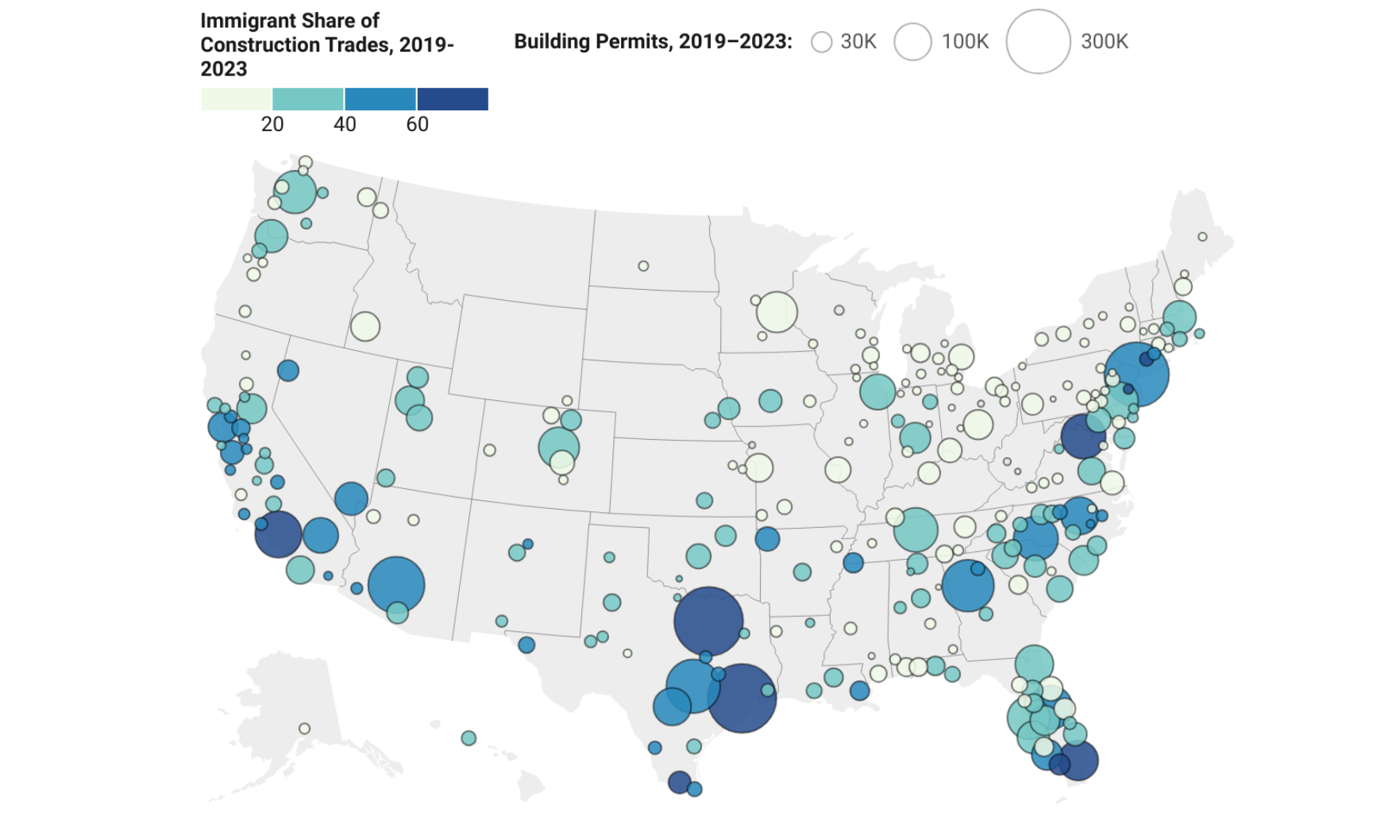
Immigrant laborers play a key role in the housing pipeline, especially for the nation’s top homebuilding metros, according to a new study from Harvard University’s Joint Center for Housing Studies.
Research showed a disproportionately high share of foreign-born workers active in the construction trades nationally in 2024. While immigrants made up one in five workers nationally, they composed one in three workers in the construction trades sector.
The highest percentage of foreign-born trade workers occurred in the seven metros that issued at least 150,000 building permits between 2019–2023. In these locations, immigrants composed 54% of the trades workforce.
In Dallas–Fort Worth–Arlington, which led the nation in homebuilding permits at 350,000, 61% of the workers in the trades had immigrated to the country.
Metros with slower housing growth still had disproportionately high shares of immigrants active in the trades. On average, metros that issued 75,000–149,999 permits had a 40% share of foreign-born trade workers, while those with fewer than 75,000 permits had a 22% share.
When categorized by specialty, foreign-born tradespeople most commonly worked as construction laborers or carpenters in 2024. They composed three-fifths of all plasterers and drywall installers in 2024 and half of all roofers, painters and carpet, tile and floor installers.
With foreign-born workers playing such an outsized role in housing production and homebuilding, negative immigration trends could signal danger for the market, according to experts.
“There is a disproportionately high share of foreign-born workers in the construction trades nationally and that share is even higher in these communities,” said Harvard Senior Research Analyst Riordan Frost. “The recent slowdown in immigration will limit foreign-born labor for the trades, however, potentially worsening chronic labor shortages and constraining the ability to build and remodel housing.”